Key difference between walk-behind and riding rice transplanters
The difference between a walk-behind and a riding rice transplanter starts with how the machine is operated, but it extends deep into field capacity, labour productivity, terrain suitability and ownership cost. A walk-behind transplanter moves forward while the operator walks behind and steers from a handlebar. A riding transplanter carries the operator on a seat above the transplanting units and covers a wider working width in every pass. Everything else in the buying decision follows from this one design split.
In practical numbers, a 4-row walk-behind unit works a strip of about 1.2 m and covers 0.10 to 0.12 hectares per hour. A 6-row riding machine works a 1.8 m strip and covers 0.25 to 0.30 hectares per hour under similar conditions. Over a 10-hour day, that is roughly 1 hectare versus 2.5 hectares. The riding machine does not just plant more; it changes how many machines, operators and days a farm needs to clear the planting window.
Neither type is objectively better. The right choice is the one that matches your field shape, soil strength, available labour and transplanting schedule. The comparison below summarises the main specifications before we go into detail.
Typical ranges from manufacturer specifications; actual values vary with row spacing, seedling mat quality and field readiness.
| Comparison item |
Walk-behind transplanter |
Riding transplanter |
| Typical row count |
2 to 6 rows |
4 to 10 rows |
| Most common configuration |
4 or 6 rows |
6 or 8 rows |
| Working width |
0.9 to 1.8 m |
1.8 to 3.0 m |
| Working speed |
0.4 to 0.6 m/s |
0.6 to 1.0 m/s |
| Field capacity |
0.06 to 0.12 ha/h |
0.18 to 0.35 ha/h |
| 10-hour coverage |
0.8 to 1.2 ha |
2.0 to 3.5 ha |
| Machine weight |
190 to 350 kg |
500 to 1,100 kg |
| Suitable farm size |
about 1 to 3 ha per season |
3 ha and above per season |
| Operator position |
walking behind |
seated on machine |
| Crew per machine |
2 people |
2 people |
What is a walk-behind rice transplanter?
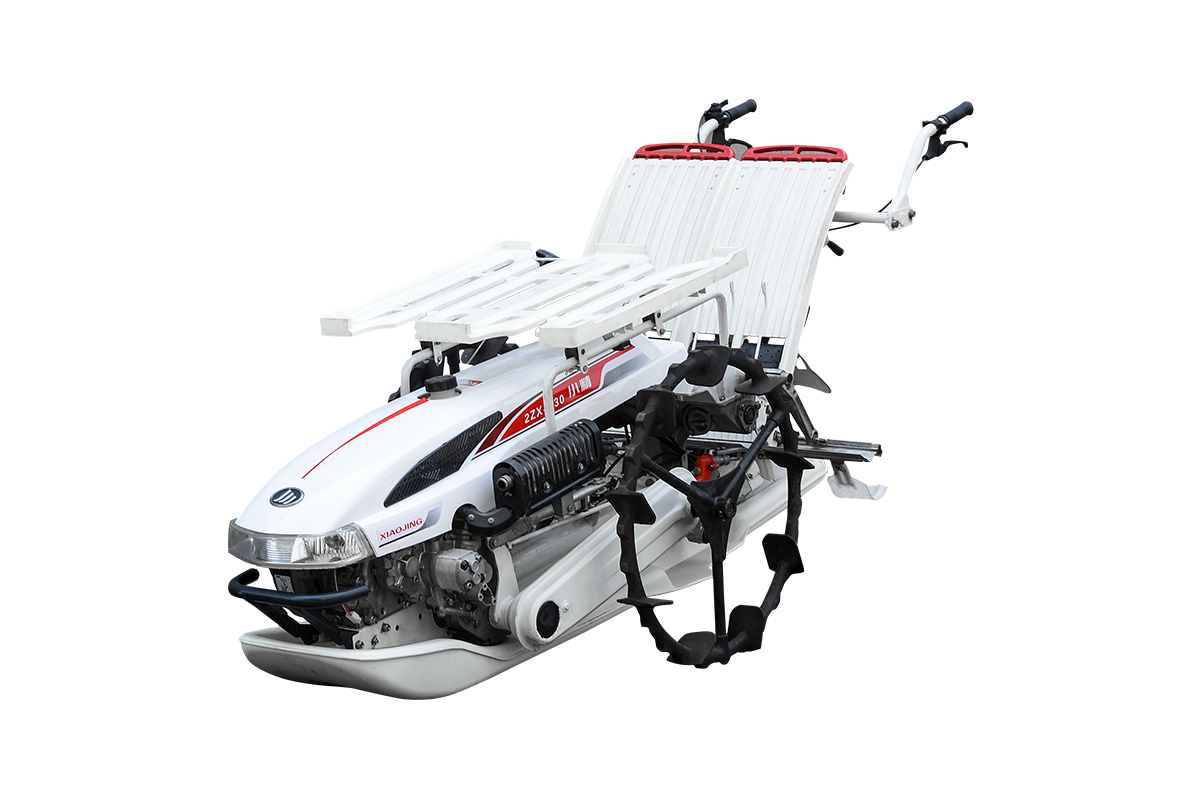
A walk-behind rice transplanter is a self-propelled machine that carries its engine, seedling trays, transplanting mechanism and float units on a compact frame. The operator walks behind at the same speed as the machine and controls steering, clutch and planting depth from a handlebar. Most walk-behind models use a small diesel or petrol engine of 4 to 6 hp, a mechanical gearbox and chain drives. Their moderate weight keeps ground pressure low, which is a clear advantage in soft paddy without a strong hardpan.
The category covers 2-row, 4-row, 6-row and 8-row versions. The 2-row mini units are used in very narrow or tray-based plots. The most widely adopted sizes are the 4-row and 6-row machines such as the 2ZX-430A and 2ZX-625, because their price, weight and output suit family farms and small cooperatives. With a 30 cm row spacing, a 4-row unit covers about 1.2 m and can finish roughly one hectare per day with a good operator and an additional person for seedling loading.
Walk-behind machines are also easier to move between fields. Their narrow width and lower weight allow them to be driven over farm paths or loaded onto small trailers, which makes them the default choice in terraced, fragmented or hillside rice areas. When a field has no road access, two workers can still manoeuvre a 4-row walker across a bund, something that is impossible with a wide riding chassis.
What is a riding rice transplanter?
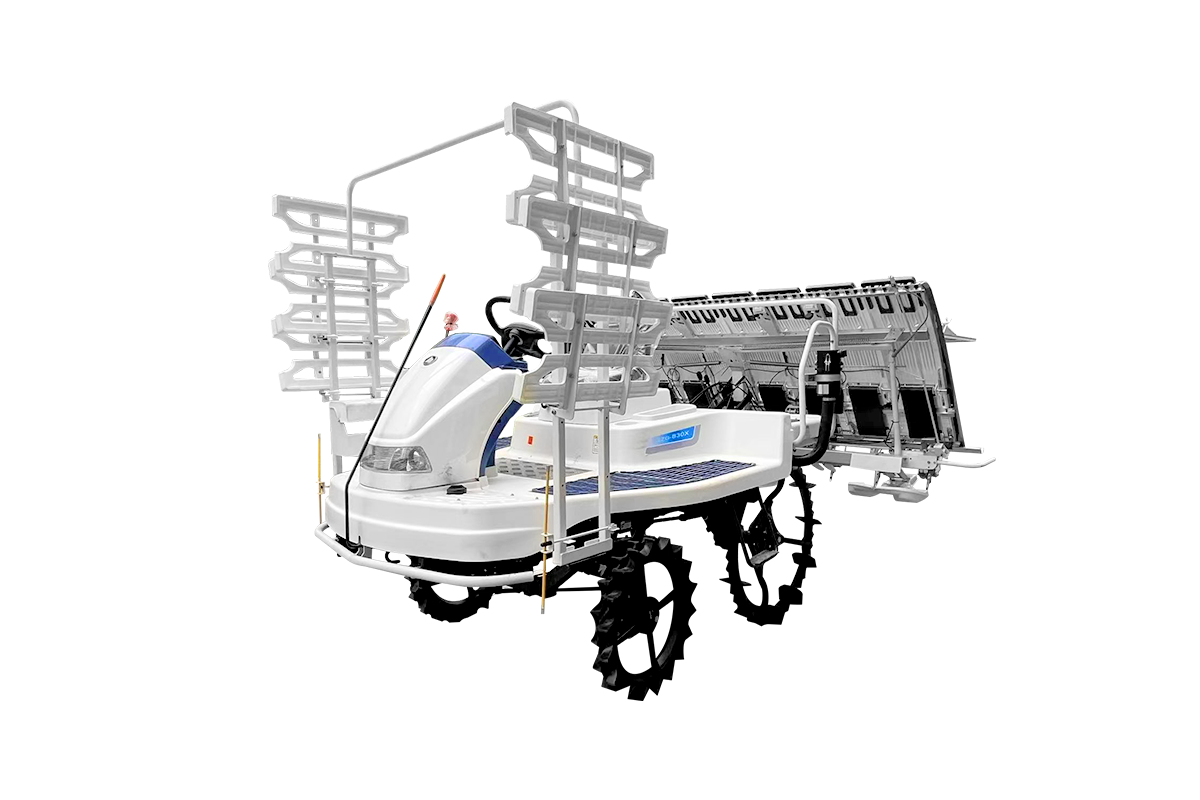
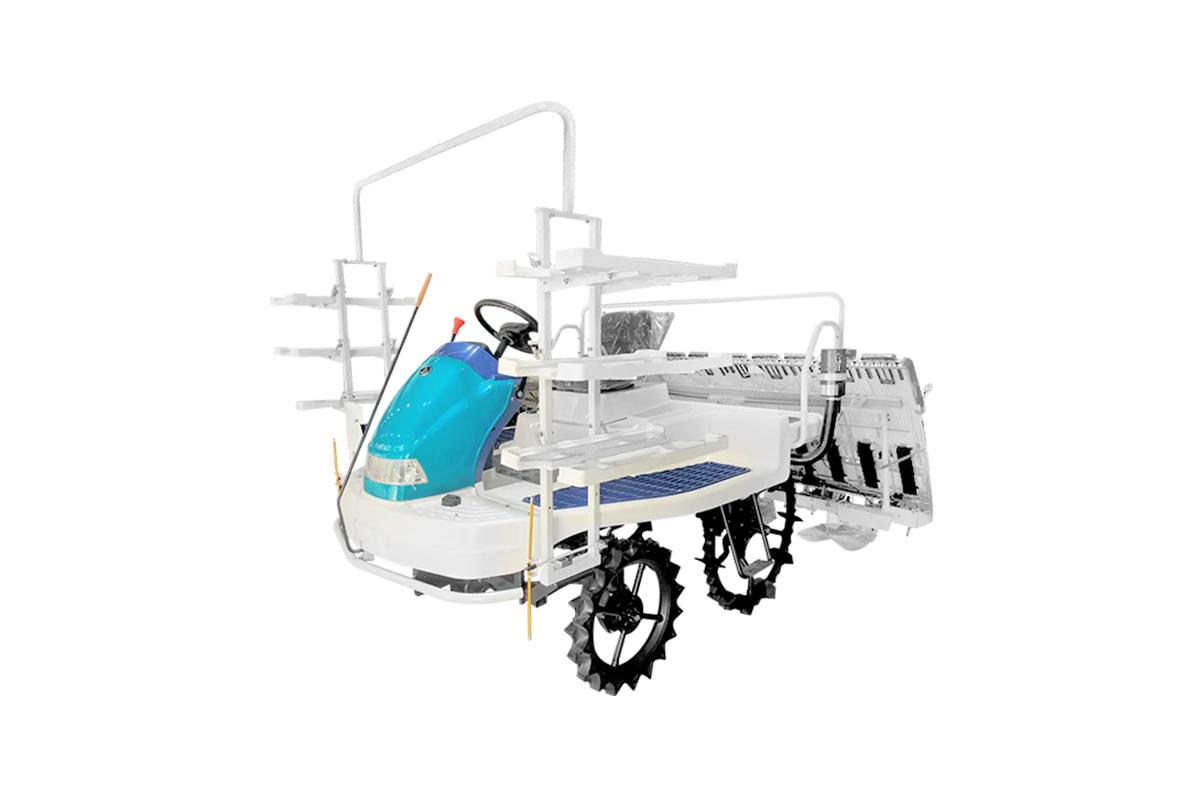
A riding rice transplanter places the operator on a seat above the machine, with the transplanting units carried on a wider frame. Riding models use larger engines from about 8 hp up to 20 hp and frequently use hydraulic or hydrostatic travel systems, so ground speed can be adjusted continuously without stopping to change gears. The seat position gives the operator a clear view of the row units, and the wider body mounts six, eight or ten planting rows.
The 6-row and 8-row configurations are the most popular on commercial farms. An 8-row machine plants a strip close to 2.4 m wide per pass, which means fewer passes, less turning, less repeat compaction and a lower cost per hectare. Riding machines typically weigh between 500 and 1,100 kg, so they rely on a firm hardpan in the first 15 to 30 cm of soil to keep the depth of each hill consistent. Where field preparation is good and plots are large, a riding transplanter can cover two to three times the daily area of a walk-behind unit with the same crew size.
Riding machines also change the work rhythm. The operator can keep a steady speed for longer, match the speed to the seedling supply continuously rather than shifting through gear steps, and observe the planting units directly. This reduces fatigue-related mistakes in the second half of the day, which is exactly when quality losses usually appear with walking machines.
Planting efficiency and daily field capacity
Field capacity is the number that separates the two categories more clearly than any other specification. It is the product of working width, working speed and time efficiency. A riding machine wins on all three at once: it is wider, it is faster, and because the operator sits, it loses less time to fatigue breaks and speed reduction during long shifts.
The table below uses a 30 cm row spacing and typical field efficiency values. Real-world output will differ with plot shape, headland turns, seedling quality and soil softness, but the relative gap between walk-behind and riding models is stable.
Calculated with a 30 cm row spacing and typical field efficiency; a 10-hour day includes refuelling and short breaks.
| Configuration |
Rows |
Working width |
Speed |
Field efficiency |
Capacity |
10-hour day |
| Walk-behind |
4 |
1.2 m |
0.5 m/s |
55% |
0.12 ha/h |
1.0 ha |
| Walk-behind |
6 |
1.8 m |
0.5 m/s |
55% |
0.16 ha/h |
1.5 ha |
| Riding |
6 |
1.8 m |
0.7 m/s |
60% |
0.27 ha/h |
2.5 ha |
| Riding |
8 |
2.4 m |
0.8 m/s |
62% |
0.43 ha/h |
3.5 ha |
1 ha/dayTypical output of a 4-row walk-behind transplanter with a two-person crew
2.5 ha/dayTypical output of a 6-row riding transplanter under the same field conditions
3.5 ha/dayOutput range of an 8-row riding transplanter on level, well-prepared fields
These differences translate directly into the number of machines a farm needs. To cover 10 hectares in a 10-day window, one walk-behind 4-row machine running long shifts is barely enough. To cover 30 hectares in the same window, a farm needs roughly three walk-behind units, or one 6-row riding machine working steadily. The riding machine also reduces turnaround time at headlands and reduces idle time while a seedling reload happens, because the tray area is positioned within easy reach of the seated operator.
Taken together, the productivity gap decides whether a farm can finish transplanting inside the agronomic window. If the window is 20 days and you operate an 8-row riding transplanter, you can finish roughly 60 to 70 hectares. A 4-row walk-behind would need three machines running daily to match that area, with three engines to maintain and six crew members to pay.
An example of a typical 4-row walk-behind workhorse is our 2ZX-430A:
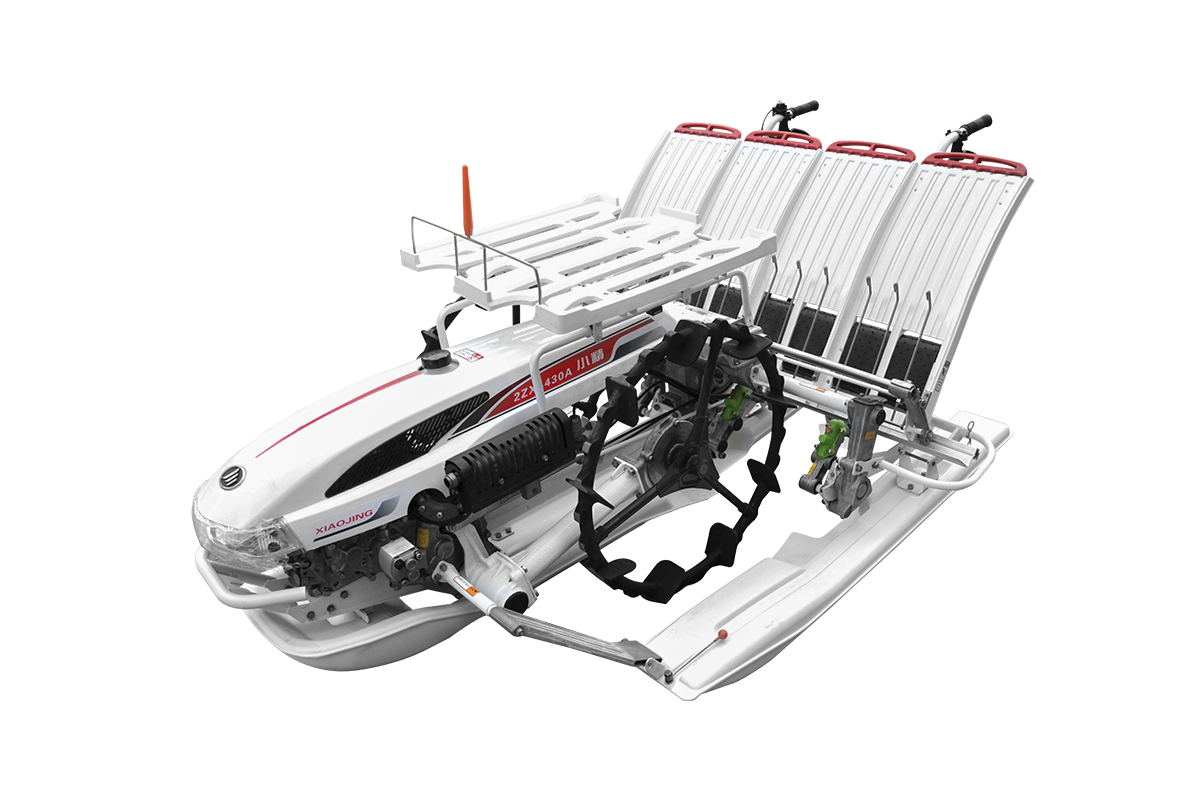 2ZX-430A Four-row Walk-behind Rice TransplanterThis motorized walk-behind model offers precise spacing and stable depth, making it a solid choice for sloping and paddy fields on smaller farms.View Product →
For a broader view of where these machines fit among manual planting and direct seeding, see our comparison of manual transplanting, walking machines and riding machines.
Field conditions and manoeuvrability
Field shape, plot size and soil strength determine whether a machine's theoretical capacity is actually achievable. A riding machine is only as good as the conditions allow; a walk-behind machine is often more robust to difficult conditions.
Small and irregular fields
Walk-behind machines excel in small plots. A 4-row unit can turn within about 2 to 3 metres and can be positioned with a two-person crew on narrow farm roads. In terraced rice systems, where fields are stepped and access is limited, a walk-behind machine remains the practical option because it can be lifted, tilted and carried over bunds in much the same way as a small power tiller.
Large level block fields
Riding machines deliver their advantage on level blocks of 0.5 ha or larger. The wider working width reduces the number of passes. On a 2 ha field, an 8-row machine needs only about 8 to 10 long passes to cover the whole block. On a 1 ha block, the time lost to turning is small enough that the machine can spend more than 80% of its working time actually planting.
Soft, muddy and weak-hardpan fields
The heavier a machine, the deeper it sinks. A 6-row riding transplanter weighing around 600 kg needs a hardpan layer within the top 15 to 30 cm of soil that can support its weight. If the hardpan is weak or absent, the wheels sink, planting depth becomes uneven and the machine leaves deep ruts. A walk-behind unit weighs 250 to 350 kg and spreads its weight over large steel or plastic floats, so it can work in fields that would stop a riding machine. In extreme mud, cage wheels can be fitted to both types.
Field suitability ratings based on common conditions in Asian rice systems; performance depends on soil preparation quality.
| Field condition |
Walk-behind |
Riding |
Reason |
| Small plots 0.05–0.2 ha |
Excellent |
Poor |
walk-behind turns in place; riding loses time turning |
| Rectangular blocks 0.3–1 ha |
Good |
Good |
both fit; riding adds speed |
| Large level blocks 1 ha and above |
Fair |
Excellent |
width and speed reduce passes and compaction |
| Terraced or hillside plots |
Excellent |
Poor to fair |
transport between levels is difficult for wide frames |
| Deep mud without hardpan |
Good |
Fair |
lighter machine and floats reduce sinking |
| Firm clay with strong hardpan |
Good |
Excellent |
weight keeps planting depth stable |
One additional factor is transport between fields. Walk-behind machines can often be driven along farm paths and loaded onto a small trailer. Riding machines usually require a dedicated trailer and sometimes a ramp, which adds equipment cost unless the machine stays in one large block for the whole season.
Transplanting quality and crop establishment
Both walk-behind and riding transplanters use the same basic principle: a pickup device separates a few seedlings from the mat, carries them down and pushes them into soft soil at a set depth and hill spacing. The rice plant itself does not care whether the operator stood or sat. But the machine's mass, stability and seedling-loading workflow affect how uniform the transplanting actually is.
Riding machines have a larger, more rigid frame. Their weight presses the float and planting units down more firmly, so planting depth stays stable even when the paddy bottom is slightly uneven. This matters for crop establishment, because a hill placed too shallow may float up, and a hill placed too deep can take up to one week longer to tiller. The stability of a riding machine is most visible in the first hours of a shift, when the operator has more attention for row alignment and speed matching.
Walk-behind machines are lighter and can bounce slightly when the bottom is rough. However, their floats are proportionally larger relative to their weight, so in normally prepared fields the quality difference is small. The bigger factor for quality is the seedling mat: both types demand a uniform mat with a well-developed root system. If the mat is too thin or too wet, both types will show more missed hills.
Headland management affects both types. Frequent turns and wet headlands cause the seedling trays to slide, which leads to empty zones in later hills. A riding machine with hydraulic speed control lets the operator slow down smoothly at headlands without abrupt clutching, which reduces those losses. In most field tests, the average quality difference between a well-adjusted 4-row walk-behind and a well-adjusted 8-row riding machine is smaller than the difference caused by seedling quality. Do not expect a riding machine to fix a poor nursery.
Operator workload, labour cost and skill
Rice transplanting is a race against time, and the operator is part of the machine system. A walk-behind machine may be physically easier to learn, but it demands sustained walking and balancing behind the machine for 8 to 10 hours. Over a 20-day season, that physical load leads to fatigue, slower walking speed and more mistakes. This is why many farms that switch to riding machines report that they finish the same area with less total manpower, even though the riding machine also needs two people.
Labour requirements are similar per machine: one operator and one additional person to load seedling mats. The difference is in the area covered per crew. With a 6-row riding machine, a two-person crew can plant 2.0 to 2.5 hectares a day. With a 4-row walk-behind, the same crew plants about 0.9 to 1.2 hectares. If the planting window is 15 days, a farm needs three walk-behind units and six people to match the output of one riding machine and two people.
The seedling supply rate scales with the machine capacity. A 6-row riding machine consumes seedling mats roughly two and a half times faster than a 4-row walker, so the loading station and the transport of mats to the field have to be planned accordingly. Farms that ignore this bottleneck find their riding machine waiting at the headland while the mats run empty.
Skill requirements differ in kind. A walk-behind machine is forgiving: speeds are low, the field of view is direct, and a new operator can learn the basics in one day. A riding machine requires more careful steering, judgement of ground speed and awareness of the row units behind the operator. Learning to drive is not difficult, but learning to transplant uniformly at high speed takes two to three days of practice. For a farm owner, the practical question is whether a skilled operator is available locally or has to be trained.
Safety also differs. The walking posture of a walk-behind machine reduces roll-over risk, but the operator is close to the engine and rotating parts. Riding machines carry the operator higher and wider, which improves comfort but increases roll-over risk on side slopes. Both types need daily checks of guards, clutch and emergency-stop devices. A riding machine should never be used on terraced slopes where one wheel can drop to the next level.
Purchase price, running cost and maintenance
The purchase price gap between walk-behind and riding transplanters is significant, but it must be read together with the productivity gap. A 4-row walk-behind transplanter typically costs less than half the price of a 6-row riding model. An 8-row riding machine can cost three to four times as much as a basic 4-row walker. For a farm that plants only a few hectares, buying the cheapest reliable machine is usually the right decision. For a farm that plants dozens of hectares, the cost per hectare is what matters, and the riding machine usually wins.
Relative comparison across common configurations; actual figures depend on market, engine brand and included accessories.
| Cost and maintenance factor |
4-row walk-behind |
6-row riding |
8-row riding |
| Relative purchase price |
1× baseline |
2.2–2.8× |
3–4× |
| Typical engine |
4–6 hp |
8–12 hp |
12–20 hp |
| Fuel per hectare |
low |
moderate |
higher but spread over a large area |
| Main focus during service |
chain, clutch, float |
hydraulics, wheel drive |
hydraulics, row units, wheel track |
| Operator training time |
1–2 days |
2–3 days |
3–5 days |
| Spare parts cost per item |
lower |
higher |
higher |
| Resale market |
broad |
broad |
narrower, mainly larger farms |
Maintenance patterns differ because the designs differ. Walk-behind machines rely on mechanical transmission: chains, sprockets, clutch plates and floater wear parts. These parts are inexpensive and relatively easy to replace on the farm. Riding machines add hydraulic hoses, cylinders, a more complex speed-control system and more wheels; when something fails, the repair is more expensive. However, because the riding machine covers more area per hour, the maintenance hours per hectare are usually lower. A farm that runs one 8-row machine instead of three 4-row walkers services one engine instead of three, stores fewer spare parts and needs one technician instead of three.
If your seasonal transplanting area is below 25 ha, a walk-behind machine will almost always give the lowest cost per hectare. Above 40 ha, a riding machine usually wins even with its higher purchase price.
The total cost of ownership threshold sits roughly between 25 and 40 ha per season. Below that range, a walk-behind machine is difficult to beat on cost. Above it, the riding machine's lower cost per hectare and smaller labour requirement justify the higher purchase price. This is why large commercial farms almost always operate riding machines, while smallholder rice systems continue to rely on walk-behind units.
A 6-row riding transplanter such as our 2ZG-630 represents the entry point of the riding class:
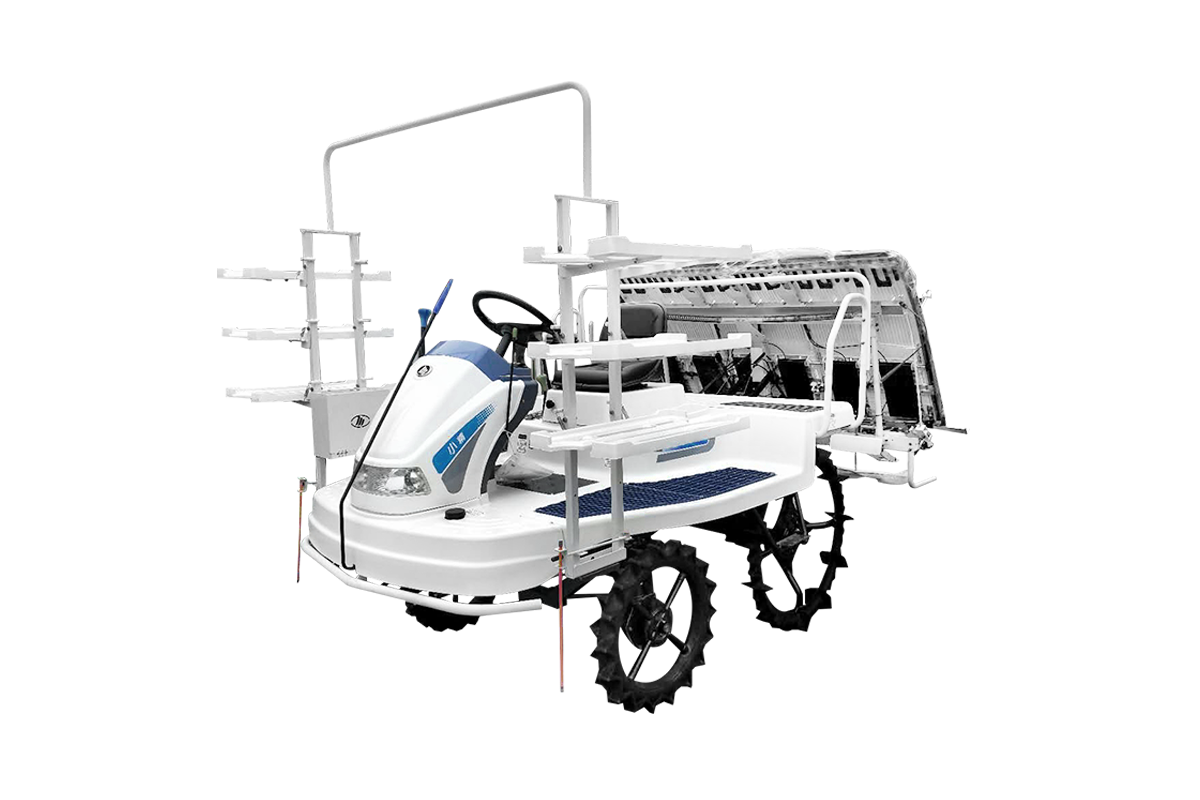 2ZG-630 Six-row Riding Rice TransplanterAs an entry-level riding machine, it combines hydraulic steering and HST reliability, suited for medium to large fields needing efficient transplanting.View Product →
How to choose: a practical decision guide
The decision between a walk-behind and a riding transplanter can be reduced to three questions. First: how many hectares must be transplanted in one season? Second: what are the field shapes and soil conditions? Third: who operates the machine, and how much labour is available?
Under 2 ha per season
Walk-behind 4-row
Fragmented plots, terraced fields and low daily transplanting pressure call for a walk-behind. A 4-row unit keeps investment low, moves easily between fields and covers about one hectare per day with one operator and one helper. If plots are extremely small, a 2-row mini unit is enough.
2 to 6 ha per season
6-row walking or compact riding
If fields are rectangular and the hardpan is firm, a 6-row riding machine shortens the season dramatically. If fields are irregular or access is poor, a 6-row walking machine offers the extra width without the weight penalty of a riding chassis.
Over 6 ha per season
6, 8 or 10-row riding
Short windows, scarce labour and large blocks point to a riding machine. An 8-row model covers 2.4 m per pass and finishes 3 to 3.5 ha per day. Farms above 20 ha per season should look at 8-row or 10-row configurations with hydraulic speed control.
The chart below compares the approximate daily coverage of the three configurations discussed above.
4-row walk-behind
0.9–1.2 ha/day
6-row riding
2.0–2.5 ha/day
8-row riding
3.0–3.5 ha/day
For farms at the top of the riding class, our 2ZG-820 eight-row model is the machine to compare:
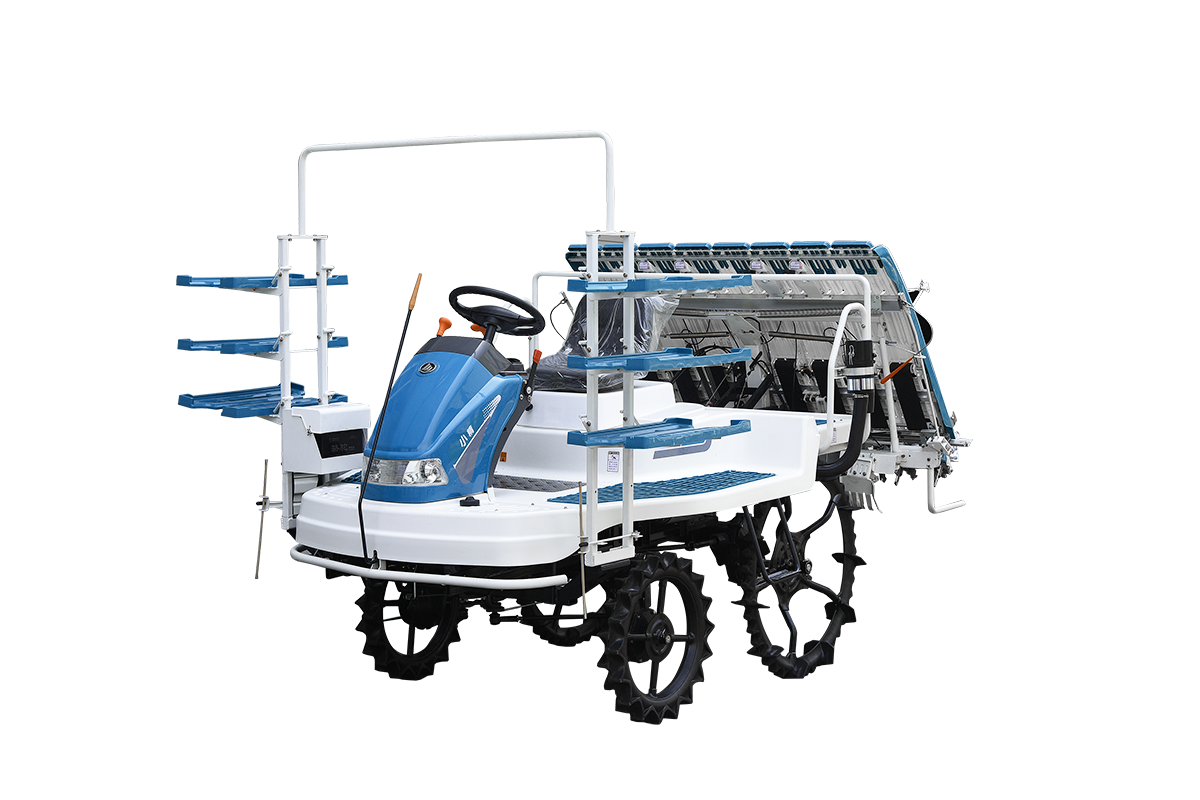 2ZG-820 Eight-row Riding Rice TransplanterA top-tier riding transplanter with four-wheel drive and hydraulic steering, built for professional large-scale operations with high output and traction.View Product →
If your situation sits between these scenarios, compare the full model range on our homepage and match the row count to your field size and planting window. A regional dealer can also tell you which machines are popular locally, which is a useful signal for spare-parts availability and resale value.
Pre-purchase checklist for either type
Before you choose a model, confirm these specifications and details with the supplier. They determine whether the machine will actually fit your agronomic requirements and whether you can support it locally.
- Row spacing: is it fixed at 30 cm or adjustable? Some regions use 25 cm or 33 cm spacing for specific varieties.
- Planting depth range: a wider range (generally 1.5 to 3.5 cm) covers more soil conditions.
- Hill spacing settings: how many steps are available, and can the operator adjust them quickly in the field?
- Wheel type: are cage wheels or semi-cage wheels included in the base price for wet paddy use?
- Engine brand and parts availability: a common engine brand makes maintenance simpler in remote areas.
- Seedling tray and mat fit: confirm the machine matches the standard mat size you will use.
- Weight and transport: how will you move the machine from one field to another?
- Spare parts package: which wearing parts are included with the delivery?
- Warranty and dealer service: what is the warranty period, and is a trained technician available in your area?
Ask the supplier these five questions before signing:
- What is the tested field capacity in your region, and with what working speed?
- Does the machine transplant well with both fresh and aged seedling mats?
- How many planting hours do the main wearing parts last before replacement?
- What routine maintenance is required after every 50 hours of work?
- Can the machine be adjusted to the specific row spacing used in my rice system?
Frequently asked questions about walk-behind and riding transplanters
Is a walk-behind or riding transplanter better for a small farm?
For a farm of about 2 hectares or less, a walk-behind machine is usually the better fit. It is less expensive, easier to move between small plots and does not require a strong hardpan. A 4-row walk-behind covers about one hectare per day, which is enough for most smallholders.
Can a riding transplanter work in muddy fields?
It depends on the hardpan. A riding machine needs a firm layer within the top 15 to 30 cm of soil. In a well-puddled field with a strong pan, it works very well. In deep soft mud without a pan, the machine sinks and creates ruts; in that condition, a lighter walk-behind with floats is the safer choice.
How many rows should I choose?
Start with your seasonal area. Up to 3 ha: choose a 4-row walk-behind. Between 3 and 6 ha: choose a 6-row walk-behind or a 6-row riding model, depending on field shape. Above 6 ha per season: a 6-row riding machine is the minimum, and an 8-row riding machine is better if the planting window is shorter than 15 days.
Are riding transplanters more expensive to maintain?
Individual parts and service hours are more expensive for a riding machine, especially hydraulic components. But measured per hectare planted, the riding machine often has lower maintenance cost because it finishes the same area with fewer engine hours and fewer machines.
Do walk-behind transplanters still make sense for commercial farms?
Yes. Many commercial farms keep a walk-behind machine as a backup unit for small patches, headland finishing and late-season replanting. It also remains the most practical option in terraced and wet-field areas where a riding machine cannot operate safely.
What row spacing do Xiaojing transplanters use?
Our rice transplanters are designed around the standard 30 cm row spacing, which matches the tray-grown seedling system used in most Asian rice regions. Each model specification states the exact adjustable range of hill spacing and planting depth; contact our team to confirm the setting for your local variety.






 [email protected]
 č. 1819, Renmin West Road, Cao'e Street, okres Shangyu, město Shaoxing, provincie Zhejiang, Čína